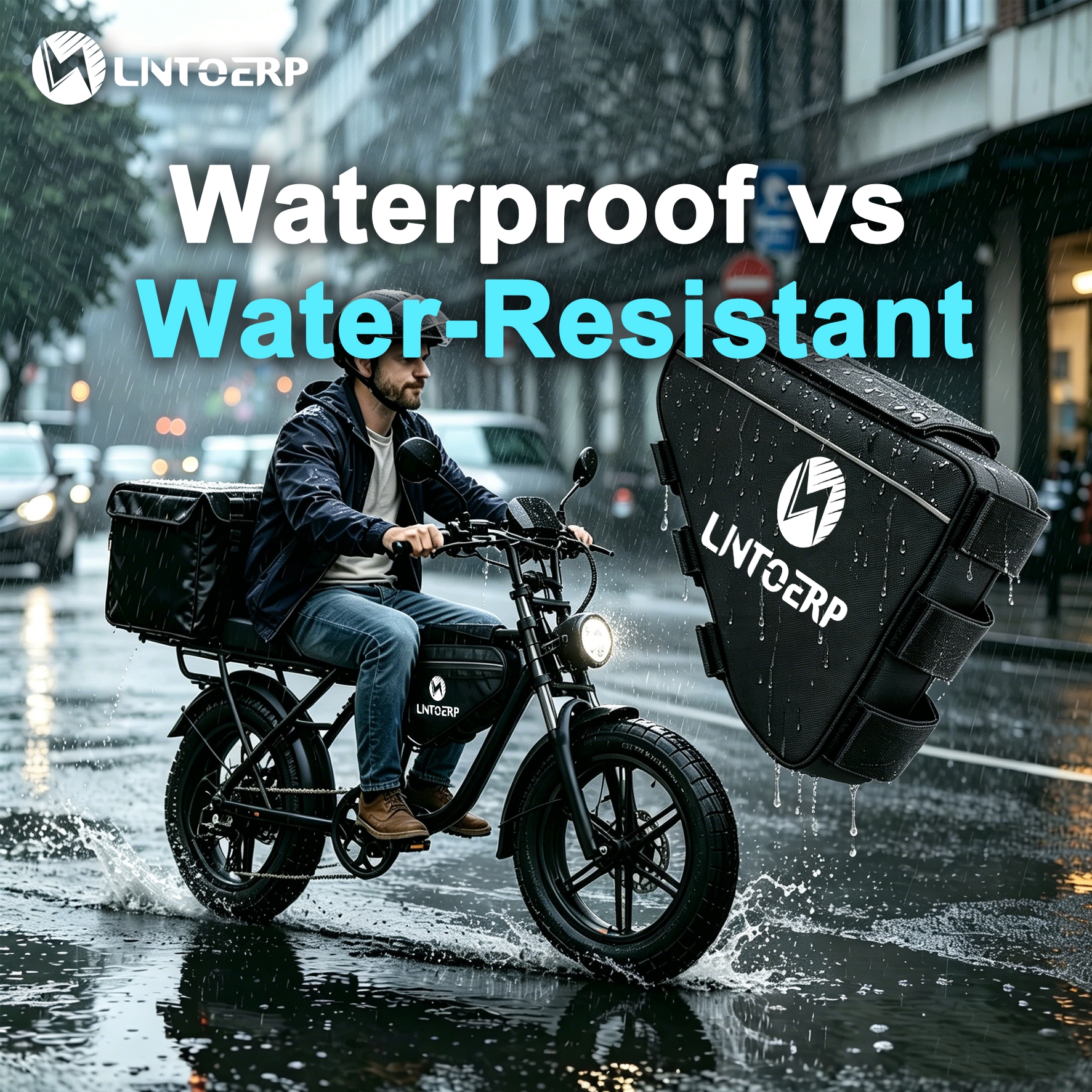
The advertisement reads: “Fully Waterproof E-Bike Battery.” The rider, trusting this claim, gets caught in a heavy downpour. Days later, the battery fails. The truth? There’s no such thing as a fully “waterproof” consumer e-bike battery under international standards. There are only clearly defined levels of ingress protection (IP).
At LN Energy Tech, we specify and test to the IP code because ambiguity is a safety risk. A customer in Amsterdam needs to know if their pack can handle a daily commute in drizzly weather, not if it can survive being dropped in a canal.
Breaking Down the IP Code: Two Numbers, Two Meanings
The IP rating always follows the format IPXY.
First Digit (X) – Solid Particle Protection: Ranges from 0 (no protection) to 6 (dust-tight). For batteries, 6 is the practical standard. It means no harmful dust ingress.
Second Digit (Y) – Liquid Protection: This is the critical one for weather. It ranges from 0 to 9K. Key levels for e-bikes:
IPX4: Protection against water splashes from any direction. Suitable for light, occasional rain.
IPX5/IP65: Protection against water jets (6.3mm nozzle) from any direction. Suitable for riding in sustained rain or being washed carefully. This is our standard rating for most packs.
IPX7/IP67: Protection against temporary immersion (up to 1 meter for 30 minutes). This does NOT mean it’s for underwater use. It’s a safety margin for accidental dunks or extreme flooding. We offer this as an option for heavy-duty or marine-adjacent use.
IPX8/IP68: Protected against continuous immersion under specified conditions. Rare and specific for e-bikes.
The Critical Misconception: Pressure & Duration Matter
An IP67 rating does not mean you can pressure-wash your battery or submerge it while riding through a deep puddle at speed. The test is static, low-pressure immersion. A high-pressure jet from a car wash or the dynamic pressure of riding through standing water can force moisture past seals that would hold under calm conditions.
How We Build for IP65 and Beyond: It’s in the Details
Achieving a genuine rating requires holistic design, not just a rubber gasket:
Seam Engineering: Case halves are joined with a continuous, channeled gasket that compresses evenly. We use thread-locker on all screws to maintain consistent compression.
Breathing vs. Sealing: A completely sealed pack can build up internal pressure from gas release in a fault or temperature changes. Our IP65 standard packs use a hydrophobic vent membrane. It allows equalization of air pressure while blocking liquid water.
Connector Strategy: We either use integral, over-molded connectors (where the wire is molded into the case) or specify IP67-rated external connectors (like certain automotive types), ensuring the weakest link is still protected.
The Reality Check: Your Responsibilities as a Rider
No Pressure Washing: Never direct a high-pressure stream at the battery, its mount, or connectors.
Inspect Seals Annually: Check the main case gasket for dryness, cracks, or permanent deformation. A simple, inexpensive replacement can restore protection.
Dry Before Charging: If the pack gets wet, wipe it down and ensure the charge port is completely dry before plugging in. Water + electricity at the contacts is a direct short-circuit risk.
Conclusion: Clarity Over Marketing Poetry
When evaluating a battery, demand the specific IP rating. If a seller only uses the vague term “waterproof,” be skeptical. At LN Energy, we state IP65 as standard because it defines a clear, testable, and appropriate level of protection for real-world conditions.
Your battery should be a trusted companion in the rain, not a fair-weather friend. Know what you’re buying.