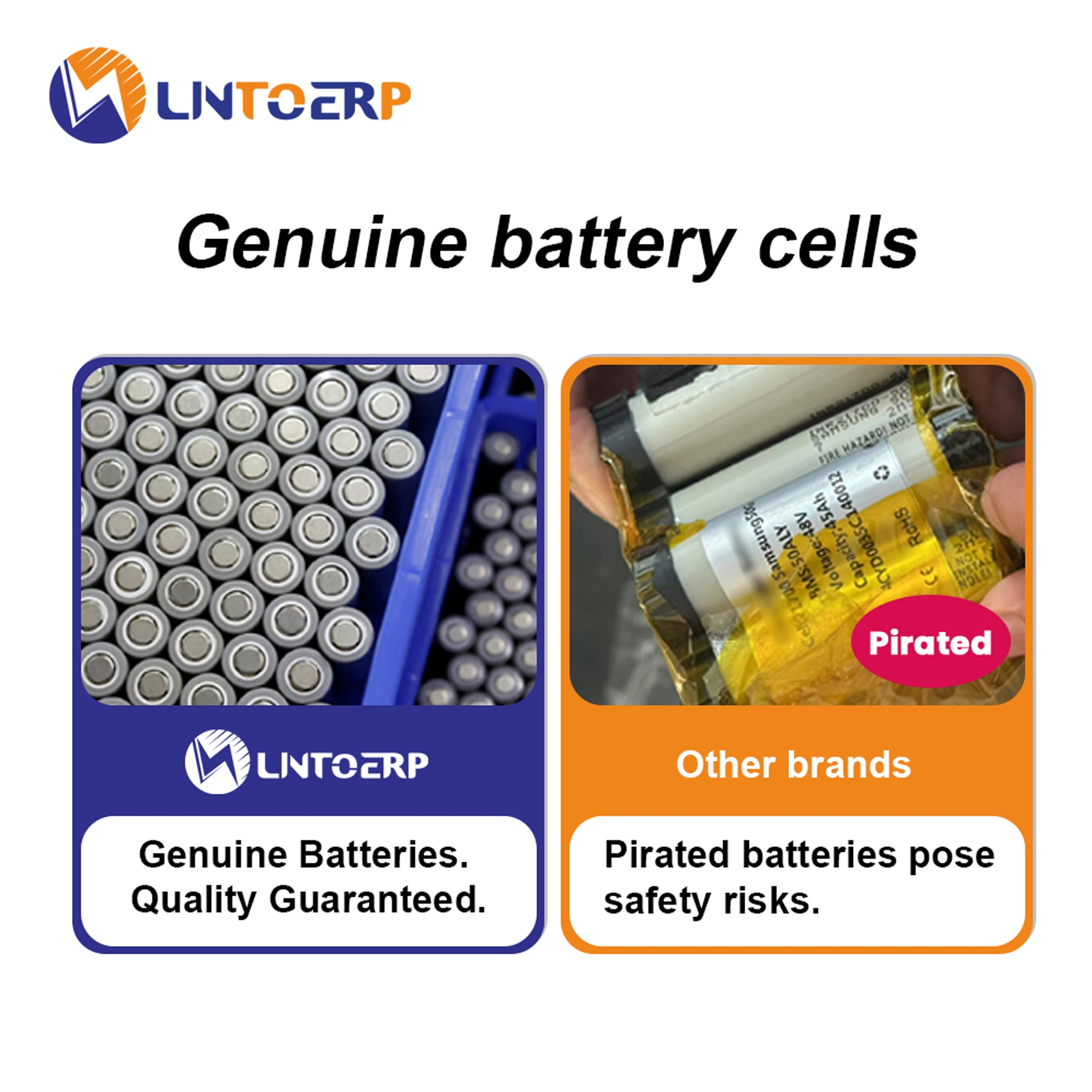
An online marketplace listing: “Genuine Samsung 50E 21700 Cells – Grade A – 50% Off Bulk Price.” For a DIY builder or a budget-conscious assembler, it’s tempting. But in our industry, a deal that seems too good to be true almost always is. The global grey market for lithium-ion cells has become sophisticated, flooding channels with rewrapped, mislabeled, and outright counterfeit cells that endanger every pack they enter.
At LN Energy Tech, our supply chain is audited. We pay the premium for traceability because the cost of a fake is measured in more than money.
The Grey Market Tiers: From “B-Grade” to “Zombie Cells”
B-Grade / Factory Seconds: These are genuine cells from major makers (Samsung, LG, Murata) that failed internal QA for capacity, internal resistance (IR), or self-discharge rate. They’re sold in bulk without brand markings. Risk: Inconsistent performance, shortened lifespan, but usually not an immediate safety hazard.
Rewraps: Lower-tier or aged cells are stripped of their original wrapper and re-sleeved with a counterfeit copy of a premium brand’s label (e.g., a 2500mAh cell wrapped as a 3000mAh Samsung 30Q). Risk: Severe. You’re operating the cell outside its true specifications, almost guaranteeing overheating under load.
Zombie Cells: The most dangerous. These are salvaged from old laptop or power tool packs, often with varying cycles and health. They’re “charged up” to show voltage, but have minimal capacity and high IR. Risk: Catastrophic failure under load, as the degraded internal structure can short circuit.
The Forensic Marks: How We Spot Fakes in the Lab
You can’t trust the wrapper. You must look deeper:
Weight: Use a precision scale. A genuine Samsung 30Q weighs about 48g. A fake might be 2-5g lighter (less active material).
Top Cap Welding: Under a magnifier, genuine cells have a perfectly symmetrical, clean laser weld around the positive terminal. Fakes often show a rougher, irregular resistance weld or glue.
QR Code & Lot Number: Genuine cells have a laser-etched, sharp code and lot number on the can. Printed or sticker codes are a major red flag.
The “Ring” Test (Crude but Telling): Gently tap two cells together. Genuine cells from major manufacturers have a distinct, high-pitched “ring.” Many fakes or low-grade cells produce a dull “thud.” This tests the internal structure integrity.
A Costly Lesson: The Assembler’s Recall
A small European assembler bought “Samsung 40T” cells at a 30% discount. Their first production run of 52V packs saw a 15% failure rate within 3 months—cells swelling and failing. When we analyzed them, the “40T” cells had the internal structure and weight of a much lower-power cell. The assembler faced a total recall, destroying their reputation and finances. The savings were illusory.
Why It Matters Beyond DIY: The Ripple Effect
When these cells enter the market in finished packs sold to consumers:
Safety Hazard: They are the leading cause of non-impact-related battery fires.
Brand Damage: When a “no-name” pack fails, it tarnishes the entire “e-bike battery” category.
Warranty Void: Any pack found to contain counterfeit cells instantly voids any warranty claim.
Your Defense as a Buyer
Whether buying cells or a finished pack:
Demand Traceability: Ask the supplier for a batch test report from the cell manufacturer. Reputable distributors can provide this.
Beware of “Too-Good” Pricing: Know the average market price for genuine cells. If it’s 25%+ below, it’s almost certainly not genuine.
Buy from the Pack Maker, Not Just the Cell Seller: A reputable pack manufacturer like us has invested in supply chain relationships and cell testing equipment. Our liability is tied to using genuine cells.
Conclusion: The True Cost of a Bargain
The cell is the heart of the battery. Compromising on the heart to save 20% on the total cost is a catastrophic financial and safety miscalculation. The lithium-ion market is a minefield for the uninitiated.
Invest in provenance. Your safety is the one thing that should never be discounted.